Picture this. It is a cold night in Florence, and you are in your slippers, walking across the yard to flip a switch. Again. Lighting timers fix that, and they do a lot more, too. We just set up a new timer system for a family in Fort Thomas, and the owner said it was the easiest change she ever made to her home. As a landscape lighting team in Northern Kentucky, we add timers to almost every system we install. Let’s discuss how an outdoor light timer works, why it helps here in Northern Kentucky, and which kind fits your setup.
What Is an Outdoor Light Timer?
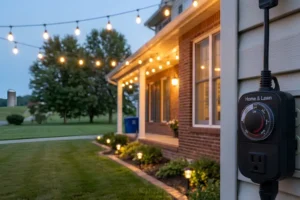
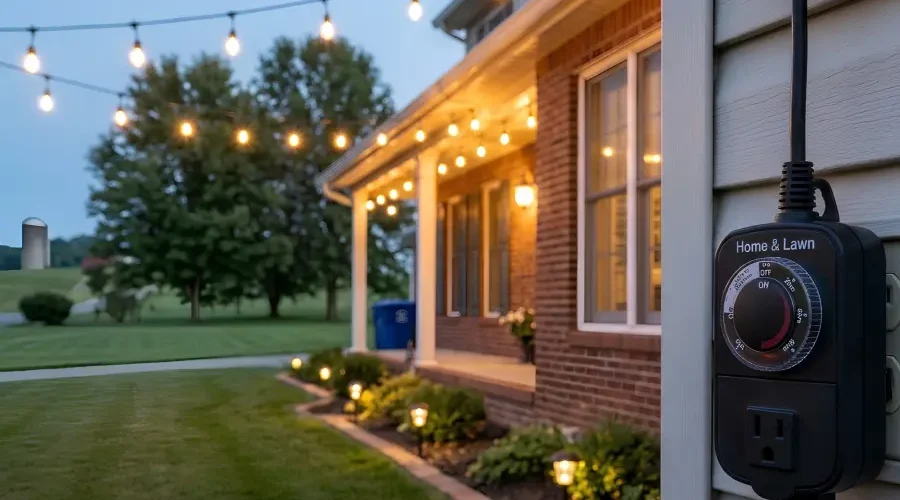
An outdoor light timer is a small device that turns your lights on and off for you. You set it once, and it does the work every day.
How Does a Basic Timer Work?
A basic mechanical timer has a dial with 24-hour marks. You push small pins to pick the hours you want, then plug in your lights. It is simple and cheap, but you have to change it by hand when the seasons shift.
What Are Digital and Smart Timers?
A digital timer lets you set a clean schedule with buttons and a screen. A smart plug goes a step further. It connects to wifi, so you can control your outdoor lights from an app on your phone, a remote control, or even with Alexa, Google Home, or Home Assistant.
Why Are Timers Helpful in Northern Kentucky?
Our area has short winter days, cold snaps, and lots of rain. A timer helps with all of it.
Do Timers Save Power and Money?
Lights that only run when you need them use less electricity. Over a full year, that adds up, especially with string lights and decor that stay up for weeks. Pair a timer with energy-efficient LED fixtures, and your front yard lighting costs even less to run.
Do Timers Keep My Home Safer?
They do. A lit porch and walkway make it tough for trouble to hide, and it helps family and guests see icy steps. We like to say a good timer is like a night guard who never asks for a day off.
Do Timers Save Time?
Of course. No more forgetting, and no more standing in the cold. Your lights come on at dusk and turn off when you pick, even if you are out of town.
Which Type of Timer Should I Choose?
The best option depends on what you want to control. Here are the types we use most.
Mechanical timers are the most basic choice, and they work well for a single string of Christmas lights.
Digital timers let you set multiple on and off times, which is handy for lights that need a different schedule each day.
Smart plugs let you control your outdoor lights from anywhere, as long as your wifi signal reaches the outlet.
Photocell sensor timers use a small eye to sense sunlight, so the light automatically turns on at dusk and off at dawn.
Battery operated timers work well for a lantern or small decoration where there is no plug nearby.
What Should I Look For When Buying a Timer?
Not every timer can handle our weather, so check a few things first.
Is It Waterproof?
Look for a waterproof rating. Rain, sleet, and snow are common here, and a weak case can fail fast. A proper cover over the plug also protects the connection.
Does It Match Your Power Needs?
Check the wattage range. Heavy loads, like many strings of bulbs, can overload a cheap timer. We always add up the total power first and pick a device that can carry it.
Is Your Outlet Ready?
Outdoor outlets should be grounded and protected. If your outlet is old or loose, call a pro before you plug in anything. Electrical safety is not the place to cut corners.
How Do I Set Up My Timer?
Setup is easy. First, plug the timer into the outlet. Next, plug your lights into the timer. Then set the timer for the hours you want, and test it once at night. For a smart plug, add a step to connect it to your wifi and app. Pick a start time at dusk and an end time around bedtime, or use the sensor option so it adjusts with the seasons. Some models have a battery backup, so your schedule stays saved if the power blinks. DarkSky International also suggests using timers or motion sensors so outdoor lights only run when they are needed.
Frequently Asked Questions About Landscape Lighting
1. Can I use a timer with Christmas lights?
Yes, most timers work well with Christmas lights. Just check the wattage so the timer can handle the whole display.
2. Do I need wifi for a timer to work?
No, basic and digital timers work without wifi. Only smart plugs need wifi, and they give you extra tools like phone control.
3. Will a timer still work during a power outage?
Sometimes. Many timers lose their settings when the power goes out, but models with a battery backup keep the schedule.
Let Your Lights Work for You
Outdoor lighting timers make life easier in Northern Kentucky. They save power, add safety, and keep your yard looking sharp without any daily effort. If you want help picking the right timer or setting up a full lighting plan, call or contact Expert Irrigation & Outdoor Lighting today at (859) 474-1411. We will check your outlets, choose the right devices, and set it all up, so your only job is to enjoy the glow.