Cincinnati summers are hot, and then the mornings turn cool almost overnight. Your lawn notices the change even if your calendar does not. We just reset the sprinkler schedule on a dozen properties this week, and the same question keeps coming up: How much water does grass need in fall?
At Expert Irrigation & Outdoor Lighting, we’re an irrigation system company that helps Cincinnati homeowners adjust their watering schedules as the seasons change. Here is what we tell our customers, with a few jokes along the way, because lawn talk should not be dry.
Why Does Your Sprinkler Schedule Need to Change in Fall?
Your irrigation system was set up for summer. Fall is a different season, so the plan has to change too.
Cooler Weather Means Less Thirst
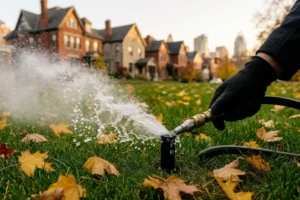
When the temperature drops, grass grows more slowly and drinks less. If your sprinkler system keeps running like it is August, the soil stays soggy. Soggy soil invites fungus and weak roots.
Shorter Days Slow Down Drying
In fall, the sun is lower and the days are shorter. Water stays in the soil longer instead of drifting into the air. That means you can water less often and still keep the grass happy.
How Much Water Does Your Lawn Need in Fall?
Most lawns in our area do well with about one inch of water per week. That number includes rain, so do not forget to count it. In late summer, many lawns need a bit more. By October, you can usually go lower.
Know Your Type of Grass
Many yards here have tall fescue. This grass has deep roots and handles changing weather well. It still needs steady water in early fall, especially if you plan to add seed to fix thin spots.
Try the Tuna Can Test
This one is simple and a little silly. Set a few tuna cans around your yard, run your sprinklers, and see how long it takes to fill them to one inch. That tells you how much water each zone really puts out. We do this test on many properties, and the results often surprise people.
What Is the Best Time of Day to Water?
Early morning is the winner. The air is cool, the wind is calm, and the water goes into the soil instead of the sky. Watering in the heat of the day wastes water because much of it dries up before the roots can use it. Watering at night keeps the grass wet for too long, and that is when fungus likes to show up.
How Do You Know If Your Lawn Is Getting Too Much or Too Little?
Your lawn will tell you if you know what to look for. Here are the signs we check when we inspect a property:
Brown spots
These can mean the turf is too dry, or that one of your sprinkler heads is clogged or pointed the wrong way.
Soft, squishy soil
This tells us the system is running too long or too often, and the roots cannot breathe.
Mushrooms and slimy patches
These are signs of fungus, and they usually mean the grass is staying wet too much.
Footprints that stay
When you walk on the grass and your steps do not bounce back, the plant needs a deeper drink.
Should You Use a Smart Controller?
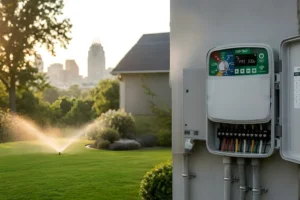
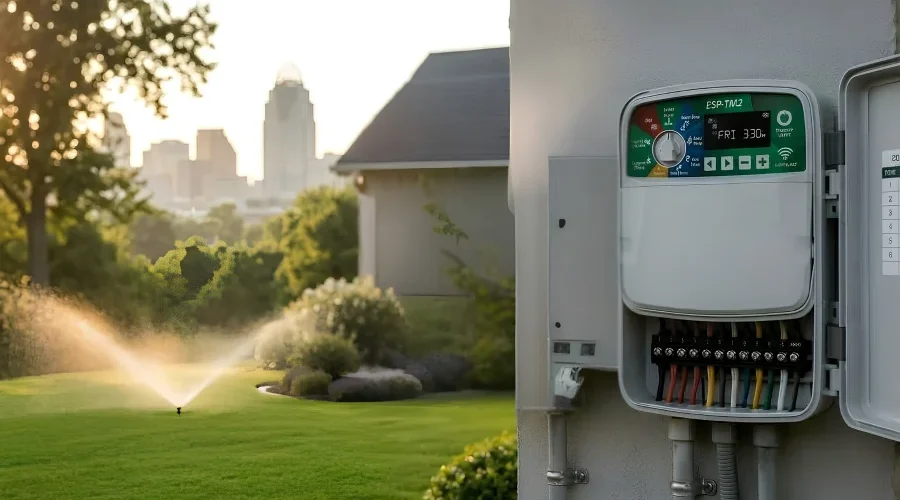
We recommend it. A smart controller waters based on local weather, so it skips a cycle when rain is on the way. It can also adjust your zone times as the days get cooler.
Wifi and Phone Control
Most smart controllers connect to wifi, so you can use a smartphone or tablet to change your sprinkler schedule from anywhere. Still using an old sprinkler timer and wondering if an upgrade is worth it?
Comparing Wi-Fi controllers with traditional sprinkler timers can help you decide which option makes seasonal watering adjustments easier for your lawn. We just handled an installation for a homeowner who changed her schedule from the grocery store line. She was very proud.
Convenience and Peace of Mind
A smart system helps with water efficiency and saves you from checking the weather every day. You get peace of mind because the system reacts to a storm or a cool snap on its own. Not sure whether your sprinkler system is using more water than your lawn actually needs? The EPA shares helpful tips for watering your lawn efficiently, including adjusting irrigation habits to reduce water waste while keeping your landscape healthy.
Frequently Asked Questions About Sprinkler Systems
1. Should I water my lawn every day in fall?
No. Watering every day in fall keeps the soil too wet and can hurt the roots. Most lawns do better with deeper watering a few times per week.
2. Can rain replace my sprinkler schedule?
Yes, sometimes. If your area gets about an inch of rain in a week, your lawn may not need extra water. A rain sensor or smart controller can skip the cycle for you.
3. Do I need to water new seed more often?
Yes. New seed needs the top layer of soil to stay damp until it sprouts. Once the grass is growing well, you can slowly water less often.
Ready to Fix Your Fall Watering Schedule?
A small fall change can save your lawn and your water bill. Lower the run times, water early in the morning, and keep an eye on the weather. Your grass will be thicker and greener when spring comes.
If you want help, call Expert Irrigation & Outdoor Lighting today at (859) 282-8101. Our team handles lawn irrigation, maintenance, installation, and winterization throughout Cincinnati.
Customers trust us because we show up, we explain things in plain words, and we get the job done right. Let us set up a lush watering schedule that fits your yard, your landscape, and your budget.