Here in Cincinnati, fall can feel like a magic trick. One day it is 65 degrees and sunny. The next morning, there is frost on the grass and a cold wind in your face. We recently finished a week of sprinkler blowouts across Greater Cincinnati, and our phones have been ringing with homeowners looking for blowout services near Cincinnati before the first hard freeze.
Many people wait until temperatures drop to schedule winterization, but that delay can lead to cracked pipes, damaged valves, and expensive spring repairs. Let’s look at what happens when a sprinkler blowout is delayed and how to protect your system.
What Is a Sprinkler Blowout and Why Does It Matter?
What does a blowout actually do?
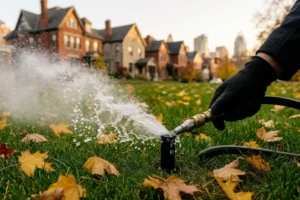
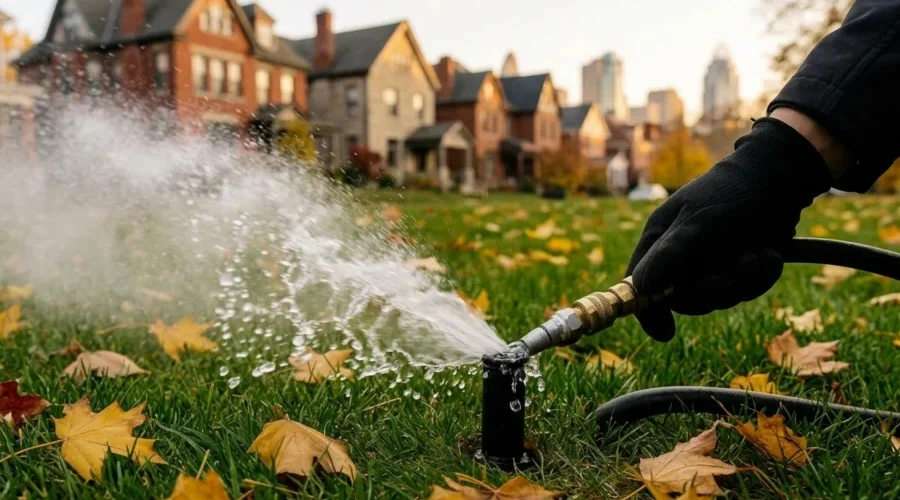
A sprinkler blowout uses an air compressor to push water out of your irrigation system. We hook up to the system, open each zone one at a time, and blow the water out of the pipe, valve, and sprinkler heads. It is the main step in winterizing your system.
Why does water left behind cause trouble?
Water expands when it freezes, like a soda can left in the freezer. Inside a pipe, that growing ice has nowhere to go, so something has to give. That is how a small amount of water left in your system turns into big damage.
What Happens When You Wait Too Long?
Freezing temperatures do not send a warning text. Here is what we see most often when a blowout is late to get done.
Cracked pipes and fittings
Ice can split a pipe from end to end. The crack may not show until spring, when you turn the water on and find a wet patch in your yard. Underground leaks are hard to spot and even harder to dig up.
Broken valves and backflow parts
The backflow device sits above ground, so it takes the first hit from a hard freeze. We just replaced one for a family who thought they had a few more weeks. A new part and a service call cost far more than a blowout would have.
Damaged sprinkler heads and nozzles
Ice can crack the body of a sprinkler head or knock a nozzle out of line. A bent or broken head sprays in the wrong direction, and that leads to water waste and dry spots. Understanding which sprinkler parts freeze and fail first can help you avoid costly repairs.
What Are the Costly Problems Homeowners Face?
Delay too long, and the repair list can grow fast. Here are the problems we fix most.
Pipe breaks
A cracked line must be dug up and patched, which means a torn-up yard and a bigger bill.
Valve damage
A frozen valve can leak or stick open, which wastes water and hurts your water pressure.
Controller trouble
A wet controller can short out, so your watering schedule may not run the way you set it.
Pump and backflow failure
These parts are pricey, and a freeze can ruin them in one night.
Lawn damage
A leak in the spring can soak the soil and keep your lawn from growing the way it should.
When Is the Right Time to Schedule a Sprinkler Blowout?
What is the best timing in Greater Cincinnati?
Most of our blowouts happen from mid-October through early November. That is the sweet spot. The grass has slowed down, and the first hard freeze has not arrived yet. If you want a spot on our calendar, it is time to schedule your irrigation winterization now.
What if the frost is already here?
A light frost is not always a problem, but a hard freeze is. If the forecast shows freezing temperatures at night, call us right away. We can often still help, but our schedule fills up quickly.
Can You Blow Out Your Own Sprinkler System?
What are the risks of doing it yourself?
Too much air pressure can crack a pipe or pop a sprinkler head. Too little air leaves water in the line. Either way, you could end up with damage you cannot see until spring.
Why do homeowners trust a professional?
When a technician blows out your system professionally, we use the right amount of air and work through every zone. We also do a thorough inspection while we are there. That means we can spot a small leak or a worn part before it turns into an expensive repair.
What Do We Check During a Blowout?
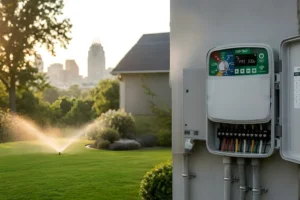
When we winterize an irrigation system, we do more than blow air through it. We shut off the water supply, drain the backflow, clear each zone, and check the controller. We also look at your sprinkler heads and note anything that needs a fix.
Then we put your system to bed so it wakes up healthy in spring. As Rain Bird explains, blowing out your sprinkler system before freezing temperatures helps prevent trapped water from damaging irrigation pipes and components.
Frequently Asked Questions About Sprinkler Blowout
1. Can a late sprinkler blowout still save my system?
Yes, as long as the pipes have not frozen yet. We can still clear the water out, but it is best to call before a hard freeze hits.
2. Do I need a blowout every year in Cincinnati?
Yes. Our winters get cold enough to freeze water in the pipes, so a yearly blowout keeps the entire system safe.
3. Will a small amount of water left in the line hurt my system?
Yes. Even a little water can freeze, grow, and crack a pipe or valve, which is why we clear every zone.
Don’t Let Winter Catch Your Sprinklers Off Guard
A late blowout is a gamble, and the weather rarely plays fair. A quick visit now can save you from cracked pipes, broken valves, and a spring surprise in your yard. We just wrapped up another busy season of system installation, repair, and winterizing, and we would love to help you next.
Call Expert Irrigation & Outdoor Lighting today at (859) 282-8101 to schedule your sprinkler blowout. We will get your system ready for winter, so your lawn is ready to shine when spring comes back around.