
Clay soil is part of life for many homeowners around Northern Kentucky. It can be hard when dry, sticky when wet, and tough for grass roots to grow through.
When a lawn gets a lot of foot traffic, mowing, pets, or heavy rain, that clay can become even tighter. That is where we see aeration and seeding make a real difference. At Expert Irrigation & Outdoor Lighting, we are a professional sprinkler company helping homeowners improve watering and overall lawn conditions.
We often work with lawns that have thin spots, bare areas, weak grass, and heavily compacted soil. From our experience, proper aeration and consistent watering can give new grass a much better place to grow.
Why Does Clay Soil Get So Compacted?
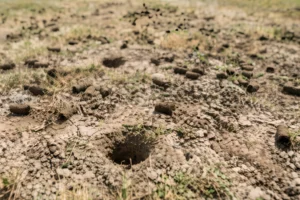
Clay soil has very small soil particles that can pack tightly together. When that happens, there is less room for air, water, and grass roots to move through the soil.
Heavy Foot Traffic
Kids, pets, outdoor activities, and regular walking can press soil together over time.
Mowing
Repeated mowing, especially when the soil is wet, can add pressure to the lawn.
Rain
Northern Kentucky gets plenty of rain, and wet clay can become easy to press down.
When the soil gets tight, grass can have a hard time getting what it needs. You may see shallow roots, thin grass, bare spots, and water sitting on the surface.
What Does Aeration Do for Compacted Clay?
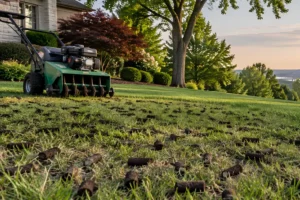
Aeration removes small plugs of soil from the lawn. Those openings give air, water, and nutrients more room to move down into the root zone.
We recently worked on a lawn where the soil was packed so tightly that water was not moving through it well. After aeration, the soil had open channels that gave the lawn a better path for water and new roots.
That is one of the first things we look for when working with compacted clay.
Better Air Flow
Open soil spaces allow more air to reach the grass roots.
Better Water Movement
Water can move into the soil instead of sitting on top.
More Room for Roots
Grass roots have openings where they can grow deeper.
Less Surface Runoff
Water has more places to enter the soil instead of quickly running away.
Why Do We Seed After Aeration?
Aeration helps open the soil, but it does not put new grass into thin or bare areas. That is where seeding comes in.
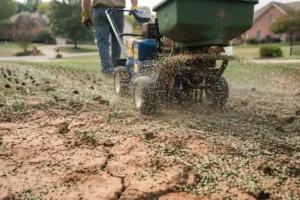
After we aerate, grass seed can fall into the small openings created by the machine. The seed gets better contact with the soil, which can help it start growing.
We see this work especially well when a lawn has thin areas caused by wear, poor grass growth, or past stress.
Better Seed Contact: Seed can settle into openings instead of sitting only on the surface.
More New Grass: Fresh seed gives thin areas a chance to fill in.
A Thicker Lawn: New grass can help create a fuller surface when conditions are right.
Stronger Coverage: More grass plants can help reduce open soil that weeds may take advantage of.
What Changes Have We Seen After Aeration and Seeding?
The biggest change we see is often the way the lawn fills in.
A lawn that looked thin before the work can begin to look fuller as new grass develops. The soil may also handle water better because the aeration holes give moisture more places to move.
One recent job had several thin areas caused by compacted soil and regular traffic. We aerated the lawn and added seed to the weak areas. With proper watering and good growing conditions, the new grass began filling spaces that had been difficult to grow in before.
It does not happen overnight. Grass needs time, water, sunlight, and the right temperatures. That is why we always remind homeowners that lawn work is a process, not a magic trick.
When Is the Best Time to Aerate and Seed in Northern Kentucky?
Timing matters with clay soil.
For many cool-season lawns in Northern Kentucky, late summer into early fall can be a strong time for aeration and seeding. The soil is still warm enough for seed to grow, while cooler fall weather helps new grass establish.
Spring can also be used in some situations, but fall often gives new grass better growing conditions.
We also look at the lawn itself before recommending the work. A shaded lawn, heavily worn lawn, or lawn with another soil problem may need a different plan.
How Can Homeowners Help New Grass Grow?
The work does not stop when we leave the property.
New seed needs steady moisture while it starts. That usually means light, frequent watering instead of letting the soil dry out for long periods.
Keep Seed Moist: Water enough to keep the seeded surface from drying out.
Watch Foot Traffic: Try to keep people and pets off new grass while it is getting established.
Follow Mowing Needs: Give new grass time to grow before mowing it too short.
Check Your Irrigation: Make sure water reaches the seeded areas evenly.
Good watering can make a big difference. We have seen well-seeded lawns struggle simply because the new seed did not get enough moisture. Not sure your system is watering evenly? Learn the warning signs that your sprinklers may need adjustment before new grass starts to suffer.
Want better results from aeration and seeding? These lawn aeration and overseeding tips can help with timing, soil preparation, and new grass establishment.
Frequently Asked Questions About Aeration and Seeding Benefits
1. Can aeration help compacted clay soil?
Yes. Aeration creates small openings in compacted soil, giving air, water, and roots more room to move.
2. Does aeration help new grass seed grow?
Yes. The openings from aeration can give seed better contact with the soil, which can support new grass growth.
3. Can aeration and seeding fix every thin lawn?
No. Thin grass can also come from shade, watering problems, pests, or other soil issues, so we check the lawn before choosing the right work.
Better Soil Can Help Build a Better Lawn
Compacted clay can make lawn care harder, but it does not mean you are stuck with thin grass forever. Aeration opens the soil. Seeding adds new grass. Proper watering helps that seed get started.
At Expert Irrigation & Outdoor Lighting, we do not just look at the grass on top. We look at what is happening below it too. That helps us choose work that fits the lawn instead of simply treating the surface.
If your Northern Kentucky lawn feels hard, has thin areas, or struggles to grow, contact us today at (859) 282-8101. We can take a look at the lawn and help you decide if aeration and seeding are a good fit.