
When fall arrives in Cincinnati, the days can still feel warm while the nights start getting chilly. That is when sprinkler winterization should be on your radar. Choosing the best Cincinnati sprinkler company can also help you prepare your system before freezing temperatures put pipes, valves, and sprinkler heads at risk.
At Expert Irrigation & Outdoor Lighting, we work on sprinkler systems throughout the Cincinnati area, and we have seen what can happen when water is left inside the system before a hard freeze. A little water trapped in the wrong place can freeze, expand, and damage pipes, valves, and other parts.
So, when should you start preparing?
Why Does Cincinnati Weather Matter for Sprinkler Winterization?
Cincinnati weather can change fast in the fall. One day may feel like summer, and the next night may bring frost.
The National Weather Service reports that Cincinnati has had its first 32-degree temperature as early as September 28 and as late as November 27.
That wide range is one reason we like to get ahead of the cold.
Your Sprinkler System Still Holds Water
Even after you stop watering, water can remain inside parts of the irrigation system.
Water in the pipes can freeze and expand, which may put pressure on the pipes and fittings.
Water in valves and other equipment can also freeze, which can lead to cracks or leaks.
Outdoor equipment can be exposed to cold air, making proper winter preparation even more important.
We just worked on another sprinkler system where the homeowner wanted to get ahead of the cold instead of waiting for the first freeze. That is the kind of timing we like to see.
When Is the Best Time to Winterize Sprinklers in Cincinnati?
For most homeowners, early to mid-October is a good time to start planning.
The actual winterization date depends on the weather, your system, and how exposed your equipment is. We watch the forecast and make sure the system is prepared before freezing weather becomes a problem.
Do Not Wait for Snow
You do not need to see snow on the ground before taking action.
Cincinnati’s normal first freeze is around October 25, according to the National Weather Service. Snow usually comes much later, so using snowfall as your signal can leave your sprinkler system at risk.
A freeze matters more than snow because water can freeze inside the irrigation system long before the first winter storm arrives.
What Does Sprinkler Winterization Include?
Winterization is more than simply turning the sprinkler controller off.
We Remove Water From the System
One of the main steps is removing as much water as possible from the irrigation lines and equipment.
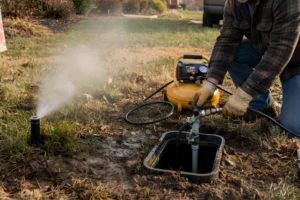
Many systems are prepared using compressed air to push water out through the sprinkler heads. The method depends on how the system was installed and what equipment it has.
Proper pressure matters because too much air pressure can damage irrigation parts.
We Check the System Before Winter
While preparing a system, we also look for signs of trouble.
Leaks should be checked before winter so a small problem does not become a bigger repair later.
Valves and exposed parts should be checked for damage, wear, or other problems.
The controller should be set correctly after the system has been shut down for the season.
This is also a good time to tell us about any sprinkler heads or zones that were not working well during the season.
What Happens If You Wait Too Long?
Waiting can make scheduling harder, especially when temperatures suddenly drop.
It can also increase the chance that water freezes before the system has been properly prepared.
We have seen homeowners put this job off because the weather still feels warm. Then one cold night shows up, and suddenly sprinkler winterization moves from the bottom of the list to the top.
That is not a fun surprise.
Getting on the schedule early gives you more time to prepare before freezing temperatures arrive.
Should You Winterize Your Sprinklers Every Year?
We recommend preparing the system each fall.
Even if the previous winter caused no problems, that does not mean the system is safe from future freezing temperatures.
Weather changes, equipment changes, and small amounts of trapped water can create different risks from year to year. Seasonal lawn care matters too, especially in heavy soil. See how aeration and seeding can benefit compacted clay soil.
At Expert Irrigation & Outdoor Lighting, we would rather prepare a system before the cold arrives than deal with a preventable repair after a freeze.
A strong topic-specific guide is from Colorado State University Extension. Their guide specifically covers preparing home sprinkler systems for winter, removing trapped water, blowouts, proper air pressure, valves, backflow devices, and freeze protection.
Frequently Asked Questions About Sprinklers
1. Should I winterize my sprinklers in October?
Yes. October is a good time to plan sprinkler winterization in Cincinnati because the normal first 32-degree freeze is around October 25.
2. Can freezing weather damage my sprinkler system?
Yes. Water left inside pipes, valves, and other parts can freeze and expand, which may cause cracks or other damage.
3. Can I wait until after the first freeze?
No. Waiting until after freezing weather can put water inside the system at risk, so we recommend preparing before the first hard freeze.
Get Your Sprinkler System Ready Before the Freeze
Cincinnati winters can be tough on outdoor plumbing, and sprinkler systems are no exception. With the normal first freeze around October 25, October is a smart time to start planning your sprinkler winterization.
The goal is simple: remove the water, check the system, and get everything ready before freezing weather arrives.
We handle sprinkler winterization at Expert Irrigation & Outdoor Lighting with the same care we use when installing and servicing irrigation systems.
If you are not sure when your system should be prepared, call us at (859) 282-8101 or contact Expert Irrigation & Outdoor Lighting. We can help you figure out the right timing and make sure your sprinkler system is ready for the Cincinnati winter.